
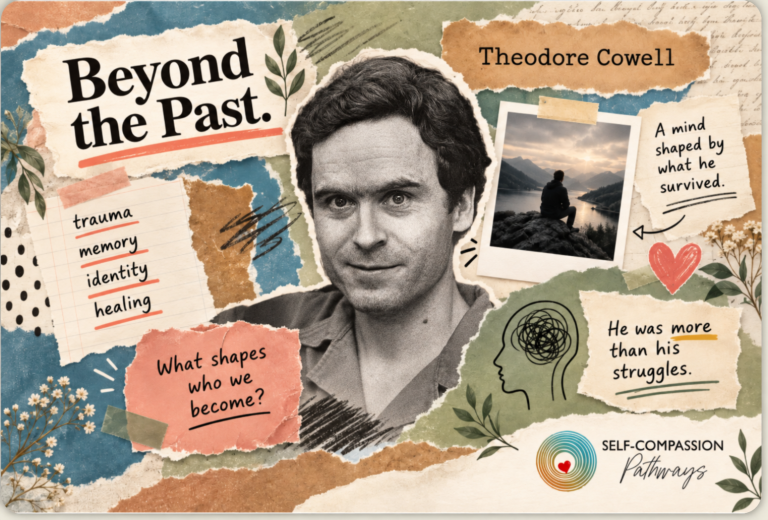
There is a birth record on file in Burlington, Vermont, dated November 24, 1946, that lists the name Theodore Robert Cowell. Almost nobody recognizes that name. But it belongs to one of the most written-about criminals in American history. Theodore Robert Cowell is the birth name of Ted Bundy, and that gap between an obscure Vermont record and a name that became cultural shorthand for violent evil contains a story worth understanding clearly.
This article gives you a grounded, source-informed account of that name and how it changed. It covers what records actually confirm, where the contested questions remain, and why the psychological themes running through this biography still matter.
No dramatization. No mythology. Just the documented timeline, its limits, and what a mental health lens helps us see inside it.
The birth of Theodore Robert Cowell: What the records show
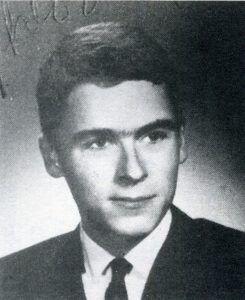 Theodore Robert Cowell was born on November 24, 1946, at the Elizabeth Lund Home for Unwed Mothers in Burlington, Vermont. His mother was Eleanor Louise Cowell. The institution served unmarried women, which meant that secrecy was woven into the circumstances of his birth from the start. That context shapes everything that came after.
The paternity question is where the record becomes genuinely uncertain. Published accounts disagree. Some sources cite Lloyd Marshall, described as a salesman and Air Force veteran, as the father listed on the birth record. Other accounts say the record lists the father as unknown. A third account, attributed to Eleanor herself, names a man called Jack Worthington. No independently verified primary document has resolved this conflict in any publicly accessible form. If you want certainty about what that original record says, the right move is to submit a request directly to the Vermont Department of Health, Vital Records Office. Published secondary accounts, including well-researched books, should be treated as research leads rather than substitutes for the underlying government document.
The Elizabeth Lund Home still exists today as the Lund Family Center. Historical admission records may exist, but client files from that era are almost certainly restricted. Any researcher pursuing this would need to contact the organization directly to determine whether non-identifying historical material is available and under what conditions.
From Theodore Cowell to Theodore Bundy: The legal name journey
 In 1951, when Theodore was five years old, his mother Eleanor married Johnnie Culpepper Bundy, a hospital cook in Tacoma, Washington. The adoption was finalized on May 19, 1951, in Pierce County, Washington. Johnnie legally adopted the boy, and Theodore became Theodore Robert Bundy, later shortened to Ted. Eleanor had also changed her own surname to Nelson around 1950, before the marriage, which is why different sources refer to her by different names during this period. Available records document a remarriage and formal adoption; any statements about the motivations behind these changes are interpretive and not established by the primary records alone.
What was not ordinary was what happened in 1969. Bundy reportedly located his original birth records and learned for the first time that the woman he had always been told was his older sister was actually his mother. Eleanor had posed as his sibling while his grandparents posed as his parents. That revelation, received in adulthood, meant Bundy had lived his entire formative years with a fabricated origin story. This detail comes from self-reported interviews rather than independent documentation, so it should be understood as his account rather than a corroborated fact. But it is a significant account.
For researchers looking to verify the legal name history, Washington State court records in Pierce County are the right starting point for the adoption decree. Washington adoption files are generally confidential, and a court petition to unseal may be required. Eleanor’s marriage record to Johnnie Bundy is likely more accessible and can help establish the legal timeline.
The Aliases: How Ted Bundy Constructed Other Identities Later
After escaping from a Colorado jail in December 1977, Bundy traveled to Tallahassee and rented a room near Florida State University under the name Chris Hagen. This is the most thoroughly documented alias in the case record. He was living as Hagen when he committed the Chi Omega sorority house murders on January 15, 1978. His true identity was established through fingerprint comparison after his final arrest in Pensacola on February 15, 1978.
Other documented aliases include Richard Burton, the name he gave 14-year-old Leslie Parmenter in Jacksonville, where he also described himself as a fire department officer. Kenneth Misner, Officer Roseland, and Rolf Miller appear in compiled case alias records, though available public sources provide limited situational detail for each. One distinction matters here: press nicknames like “Co-ed Killer” and “Lady Killer” were labels assigned by journalists, not identities Bundy chose. And “Ted” was his actual given name, used openly. Available records suggest these aliases were situational and functional; the record does not show evidence of Bundy constructing a sustained alternate life under any alias. The birth name Theodore Cowell plays no role in that alias history.
What primary sources actually confirm, and where to look
The documentary record
 The Vermont birth record is the foundational document for Theodore Robert Cowell’s existence, but it remains in government hands and has not been reproduced publicly in verified form. Florida criminal proceedings are the most accessible body of primary documentation in this entire case. The 1979 Chi Omega trial and the 1980 Kimberly Leach trial produced conviction records, trial transcripts, and appellate materials that are far more available than anything from Vermont or Washington in 1946 and 1951.
Research hierarchy
Researchers should work through this hierarchy when pursuing primary sources:
- Vermont Department of Health, Vital Records Office: for the original birth certificate, any amendments, and paternity entries.
- Pierce County, Washington court archives: for the 1951 adoption decree and name-change documentation.
- Florida Department of State and Florida court records: for the Chi Omega and Kimberly Leach trial transcripts.
- Contemporary newspaper archives: Burlington and Tacoma papers from the 1940s and 1950s for birth notices and local items that predate the criminal history.
Books like Ann Rule’s account are valuable research tools for leads and context, but they do not substitute for the underlying government records. The Michaud and Aynesworth interview transcripts are primary sources for Bundy’s own recollections and should be treated as self-report rather than independent corroboration.
Identity, Early Trauma, and the Psychology Underneath the Biography
What disrupted origins actually cost
Here is where this story asks for a different kind of attention.
A child raised without any knowledge of who his father was, told his mother was his sister, and given a fabricated family structure that nobody corrected for over two decades: those are real psychological conditions, not details in a criminal biography. They are also not excuses.
Millions of people grow up in complicated, even deceptive, family circumstances without harming anyone. Causation does not run in a straight line from early loss to violent crime.
 As a therapist and founder of Self-Compassion Pathways in Orlando, Florida, I work with clients navigating challenges related to identity formation.
When primary caregivers deceive a child for years about their origins, the developmental damage is specific: difficulty building a coherent sense of self, confusion about trust, and persistent uncertainty about who you are and where you come from. That confusion does not resolve on its own.
Attachment theory literature and Adverse Childhood Experiences (ACE) research both point toward a consistent pattern: when children are denied age-appropriate access to their own history, the costs show up in identity coherence, emotional regulation, and relational trust, sometimes for decades.
Why the birth name matters
What decades of documentaries and true crime content have done is flatten this story into a genre. The name Theodore Cowell appears far less often in popular coverage than the criminal persona does. That omission matters. It removes the developmental context entirely and leaves the public with a mythology rather than a biography. A well-sourced account looks at the whole timeline, including what was happening in Burlington in 1946 and in Tacoma in 1951, not just the criminal history that began in 1974.
When reading this kind of material starts to feel heavy
Vicarious distress is real. When you absorb traumatic or disturbing content, even as a reader doing historical research, your nervous system responds. True crime content is specifically designed to keep you engaged, which means it often bypasses the natural limits you would apply in other contexts. You may finish an article like this one and notice anxiety, restlessness, or a sense of preoccupation that follows you through the rest of your day. That is a recognized and normal response, not overreaction.
Practical limits help. Time-bound reading sessions, deliberate breaks between heavy topics, and keeping this kind of material away from the hour before sleep are all straightforward boundaries that reduce accumulation.
We frame it this way with clients:
curiosity about difficult topics is healthy and human.
The question to ask yourself is whether you are engaging with the content or whether it has started engaging with you. When the second thing is true, a boundary is overdue.
If this material connects to something personal, grief, your own complicated family history, anxiety that feels bigger than one article, or a pattern of being drawn to disturbing content as a way of managing stress, that is worth talking through with a professional.
Self-Compassion Pathways offers individual therapy in Orlando, in person and through virtual sessions for anyone in Florida. If something in this story touched a nerve, reaching out to a licensed mental health therapist is a meaningful next step. That is what the practice is here for.
What this story actually holds
 That birth record in Burlington identifies him as Theodore Robert Cowell, born November 24, 1946. That name became Theodore Robert Bundy through a 1951 adoption in Pierce County, Washington, finalized when his mother married Johnnie Bundy. The aliases, most prominently Chris Hagen, came much later and were situational deceptions. The primary sources that can verify this timeline are held in Vermont and Washington archives, with the most accessible documentation coming from the Florida criminal proceedings.
Underneath the criminal record is a portrait of identity built on concealment and loss.
That is not a justification. It is a human story, and understanding it clearly is different from explaining it away.
If reading the story of Theodore Robert Cowell raised questions about your own history, identity, or emotional weight you have been carrying, those questions deserve real attention. Self-Compassion Pathways is ready to help you work through them.
