

Some people feel that love is either there or it isn’t. You either have the capacity for it, or life has taken it from you. That belief, quiet as it is, becomes unbearable after anxiety or trauma. Because when you can’t feel close to yourself or to the people you care about, you start to wonder if something inside you is simply broken.
Here is a different way to think about it: love, including the love you have for yourself, is not a fixed trait you were born with or without. It is a skill. And like any skill, it can be worn down by hard circumstances and rebuilt with the right kind of attention. That is not a motivational slogan. It is what researchers across the fields of self-compassion, trauma neuroscience, and clinical psychology have consistently demonstrated.
This is the conviction behind Self-Compassion Pathways, a counseling practice in Orlando, Florida, led by Dr. Coralis Solomon. The work done there starts from one premise: love can be restored after harm. What follows is both an explanation of why that’s true and a set of tools to help you begin.
What Anxiety and Trauma Actually Do to Your Capacity for Love
Trauma rewires the nervous system toward threat detection. When that happens, vulnerability stops feeling like intimacy and starts feeling like danger. This is not a personal failure. It is a survival response, and it makes complete neurological sense.
Trauma neuroscience research, including foundational work by Bessel van der Kolk and colleagues, has documented two things happening simultaneously: the amygdala, the brain’s threat alarm, becomes more reactive, while the prefrontal cortex, which handles emotional regulation and social flexibility, becomes less able to quiet that alarm. The result is a brain chronically scanning for risk, even inside relationships that are actually safe.
How a Dysregulated Nervous System Blocks Emotional Closeness

When the body stays in a state of low-grade alertness, closeness starts to feel like exposure. Hypervigilance, emotional numbness, fawning, and avoidance all make sense as protective strategies. But they are the same strategies that keep genuine connection at arm’s length. Romantic and familial bonds are particularly disrupted because they require exactly the kind of openness the nervous system learned to shut down.
This is why telling yourself to “just open up” rarely works. The nervous system is not responding to logic. It is responding to a learned threat signal that has been reinforced, sometimes for years.
The Self-Blame Loop That Trauma Leaves Behind

Trauma also tends to generate shame. Not just sadness or grief, but the specific, corrosive belief that something is wrong with you. When that belief takes hold, self-love becomes almost impossible to imagine, let alone practice. The internal voice becomes harsh and relentless. Self-criticism replaces self-compassion.
Interrupting that internal narrative is one of the first things skilled therapy addresses. Not because positive thinking fixes trauma, but because addressing shame and cultivating self-compassion are important components of many effective trauma treatments and can help open the door to other therapeutic work.
Why Self-Love Is a Skill, Not a Personality Trait
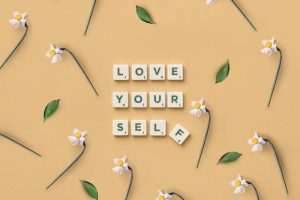 Researcher Kristin Neff spent decades studying self-compassion, and what her work shows, repeatedly, is that treating yourself with kindness is something you can learn. It is not reserved for people who had easy childhoods or naturally warm temperaments. It is a practice, and it has measurable effects on anxiety, depression, and emotional resilience.
Neff and Germer’s randomized controlled trials of the Mindful Self-Compassion program found that participants showed significant reductions in anxiety, depression, and stress, and those gains held at six-month and one-year follow-ups. A separate systematic review examining self-compassion and trauma found that higher self-compassion was consistently linked to fewer PTSD symptoms, and self-compassion-based interventions improved trauma-related distress in the majority of the studies reviewed.
The Three Pillars of Self-Compassion
Neff’s model rests on three components that work together, and each one directly counters what trauma does.
The first is self-kindness: treating yourself the way you would treat a good friend who is struggling, with warmth rather than judgment. It interrupts the shame loop that trauma installs.
The second is common humanity: recognizing that suffering is not a personal flaw but a shared human experience, which dissolves the isolation trauma so often produces.
The third is mindfulness: observing painful feelings without either suppressing them or being consumed by them, creating just enough distance from intense emotion to respond rather than react.
Clearing Up the Self-Love vs. Selfishness Myth
Many clients resist self-compassion because it feels indulgent. This is especially true for people raised in environments where self-sacrifice was expected or where their own needs were consistently minimized. The concern is understandable, but it gets the relationship backward.
Caring for yourself is not a luxury. It is what makes genuine care for others possible.
 Caring for yourself is not a luxury. It is what makes genuine care for others possible.
You cannot draw water from an empty well, and you cannot offer real presence to the people you love when you are running on depletion and shame.
Practical Self-Compassion Exercises to Start Rebuilding
These are not cures. They are starting points, and consistent practice matters far more than doing them perfectly once.
The Self-Compassion Break: A Three-Step Daily Practice
1. When you notice distress, pause.2. Name what you are feeling without judgment: “This is hard. I am struggling right now.” Then remind yourself that you are not alone in this: “Other people feel this too. Suffering is part of being human.”
3. Finally, place a hand on your chest and offer yourself one kind phrase, something you might say to a friend: “May I be gentle with myself right now.”
Research on mindful self-compassion practices suggests this kind of exercise supports the body’s self-soothing response. Done consistently, it begins to loosen the grip of the self-critical voice that trauma tends to install. It takes under two minutes, and it works best when used regularly rather than only in crisis moments.
A Note for Clients Who Process Life in Spanish
Healing feels different when it happens in your first language. Studies on language concordance in therapy, including a meta-analysis reviewed by the American Psychological Association, have found that therapy delivered in a client’s native language produces meaningfully better outcomes than therapy delivered in a second language. The reason is straightforward: emotional memory, autobiographical experience, and self-talk are all deeply tied to the language you think and dream in. Self-compassion phrases land more accurately when spoken in the words your nervous system has always used for emotion.
Bilingual therapy is not a convenience feature. It is a clinically meaningful choice. If Spanish is the language where your interior life lives, receiving care in Spanish is part of receiving full care. That support is available at Self-Compassion Pathways.
Rebuilding Love in Your Closest Relationships

Anxiety and trauma do not only affect the relationship you have with yourself. They shape how you attach, how you communicate, and how you repair conflict with partners, children, and family. The nervous system that learned to protect itself can also learn to reconnect, gradually, with consistent practice.
Communication Scripts That Reduce Defensiveness Between Partners
When one or both partners carry trauma, ordinary conflict can escalate quickly because the nervous system reads emotional tension as danger. Having language ready for those moments makes a real difference. A few phrases worth practicing:
“I notice I’m pulling away right now. It’s not about you. Can we slow down?”
“I’m getting activated. Can we take a short break and come back to this?”
“I want to keep talking about this, but I need to feel a little safer first.”
Couples researcher John Gottman calls these “repair attempts,” and his research on relationship stability shows they are one of the strongest predictors of long-term relationship health. Gentle startup and explicit bids for connection are especially important when trauma histories are part of the picture. They signal that the relationship is a safe place even when things are hard.
Parent-Child Attunement Activities for Families Healing Together
 Parents recovering from anxiety or trauma often worry that they have damaged their children’s sense of safety. Attunement activities, supported by attachment-based intervention research, rebuild that connection in small, repeatable moments rather than through grand gestures.
Two accessible ones to start with: Narrated play, where you describe what your child is doing without directing it (“You’re building something really tall. You’re choosing the red block”), creates a felt sense of being seen and is a core technique in child-led play therapies. The “two things” evening check-in, where each person shares one hard thing and one good thing from the day, builds the emotional vocabulary and co-regulation skills that both children and caregivers sometimes missed in their own early experiences.
When Professional Support Makes the Difference
Practical tools have real limits when trauma runs deep or when relationship patterns feel stuck no matter what you try. That is not failure. That is the point at which having a trained therapist in your corner becomes essential.
What Therapy at Self-Compassion Pathways Addresses
 We built Self-Compassion Pathways around a holistic, mind-body approach to healing. Individual sessions address anxiety, trauma, and the specific internal wounds that block self-love and genuine connection. Couples counseling creates a structured, guided space for partners to rebuild trust and communication, with a therapist who understands how trauma shapes relational patterns. Children and adolescent therapy provides specialized support for younger clients navigating emotional, behavioral, or developmental challenges, with care tailored to their stage of life.
Individual, Couples, and Youth Sessions in English and Spanish Across Florida
In-person sessions are available in Orlando. Virtual sessions are available to any Florida resident who prefers the flexibility of working from home. All services are offered in both English and Spanish, so clients can receive care in the language where healing feels most natural and complete. If you are ready to take the next step, reach out to Self-Compassion Pathways to schedule an intake call with Dr. Solomon. The process starts with one conversation.
The Skill You Can Rebuild
Love is not a fixed trait. Anxiety and trauma can dim it, sometimes for a long time, but they cannot permanently eliminate it. Self-love, the love between partners, and the love between parents and children are all skills. They can be developed, repaired, and deepened.

The exercises and scripts in this article are genuine starting points. Try the self-compassion break today. Use one of the communication phrases the next time a conversation with your partner gets hard. Notice what shifts. Real, lasting change tends to happen in relationships, including the therapeutic relationship, where someone trained to hold space for exactly this kind of work can walk alongside you.
Whether you are in Orlando or anywhere across Florida, Self-Compassion Pathways is available to you.
The capacity for love is still there. It just needs a path back.
